
What Does “At-Fault” Actually Mean in California?
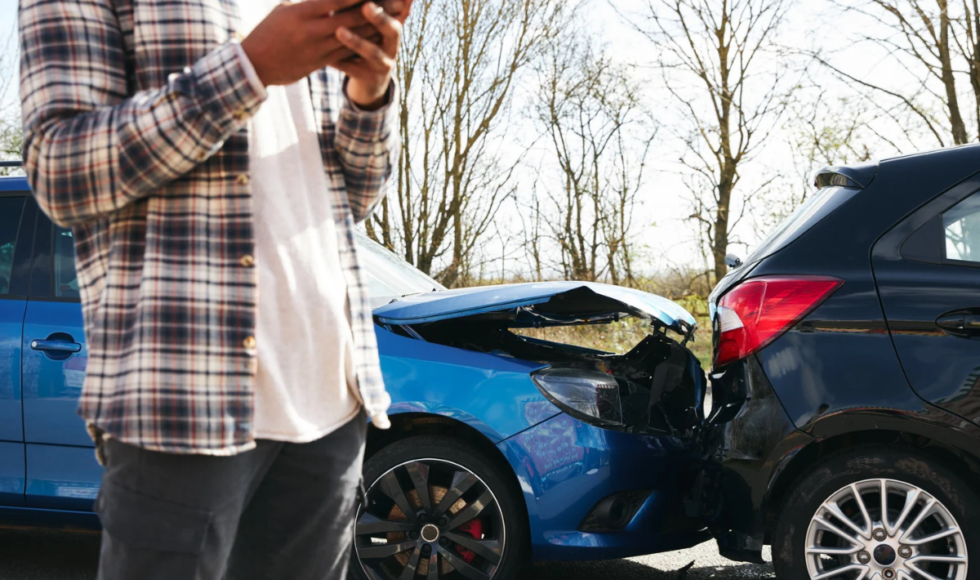
After a car accident, one of the first questions people often ask is: “Who was at fault?”
But determining fault after a crash isn’t always as simple as pointing to one driver.
In California, more than one person can share responsibility for an accident. Understanding what “at fault” means—and how California handles shared responsibility—can help you better understand what may happen after a crash.
If you have suffered an accident and have concerns about your at-fault insurance coverage, the San Diego car accident lawyers at Eugene Bruno & Associates would be happy to answer your questions.
What Does “At Fault” Mean?
Generally, a driver may be considered at fault when their actions or failure to act contributed to causing an accident.
For example, a driver who runs a red light and crashes into another vehicle may be considered responsible for causing the collision. But accidents are not always that straightforward.
A crash may involve multiple factors, such as:
- Speeding
- Following too closely
- Failing to yield
- Distracted driving
- Unsafe lane changes
- Poor visibility or road conditions
- The actions of another driver
The specific facts of the accident matter when determining responsibility.
Can Both Drivers Be At Fault?
Yes.
California follows a comparative fault system. This means responsibility for an accident can be divided among multiple people based on their respective contributions to the accident. The California Department of Insurance also notes that, in many accidents, both drivers may share fault.
For example, imagine two drivers are involved in a collision. After considering the circumstances, responsibility is determined to be:
- Driver A: 70%
- Driver B: 30%
That doesn’t necessarily mean one driver is completely responsible and the other has no claim. Instead, the percentage of responsibility can affect how damages are allocated.
California’s comparative-fault principles allow a person’s recovery to be reduced in proportion to their share of responsibility. The Judicial Council’s current civil jury instructions recognize comparative fault as a way of apportioning responsibility among parties who contributed to an injury.
Who Decides Who Is At Fault?
There isn’t always one person or agency that makes the final determination.
After an accident, insurance companies, law enforcement, and courts may all play different roles in evaluating what happened. The California Department of Insurance explains that insurance companies investigate accidents and that comparative negligence may be determined by police, insurers, or courts.
Insurance companies may consider evidence such as:
- Statements from the drivers
- Witness statements
- Photos and videos
- Damage to the vehicles
- Police reports
- Traffic laws
- Accident diagrams
- Available surveillance or camera footage
An insurance company’s determination is not necessarily the final word on legal liability. If the parties cannot resolve a dispute, the issue may ultimately be addressed through the legal process.
What If You Disagree With the Insurance Company’s Fault Decision?
It is possible for the drivers involved in an accident to have very different versions of what happened.
For example, one driver may claim they had the right of way, while the other driver says the opposite.
In California, auto insurers are subject to rules governing how they investigate and determine whether an accident is principally at fault. The Department of Insurance’s regulations include requirements concerning fault determinations and the investigation of automobile claims.
If you disagree with an insurance company’s determination, the evidence surrounding the accident can become particularly important.
That is why it can be helpful to preserve photographs, videos, witness information, medical records, vehicle damage documentation, and other evidence as soon as possible after a collision.
Does Being Partially At Fault Mean You Can’t Recover Anything?
Not necessarily.
California’s comparative fault system generally allows a person who contributed to their own injuries to recover damages, with the recovery reduced according to their percentage of responsibility.
For example, if a person is found to be 20% responsible for an accident, their recovery may be reduced by that percentage.
The actual application of comparative fault can depend on the facts of the case, the parties involved, and the types of damages being claimed. California’s Judicial Council specifically recognizes comparative fault as a method for determining how responsibility for an injury should be apportioned.
Why the Details of the Accident Matter
After a crash, it can be tempting to assume that fault is obvious.
But determining responsibility can involve looking at what each driver did—or failed to do—before the collision.
That is why documentation can be so important.
If you are involved in an accident, consider:
- Taking photographs of the vehicles and accident scene
- Getting contact and insurance information from the other driver
- Identifying potential witnesses
- Reporting the accident when required
- Keeping records of medical treatment
- Preserving relevant video or other evidence
- Avoiding assumptions about fault before all the facts are known
What Does “At Fault” Mean for Your Insurance?
Fault can also have insurance consequences.
The California Department of Insurance explains that an insurer may apply a surcharge when an insured driver is determined to be at least 51% at fault for an accident, subject to applicable rules.
This is one reason understanding how fault is determined can be important—not only for an injury or property-damage claim, but also for your auto insurance.
“At fault” doesn’t always mean one driver is 100% responsible.
California allows responsibility to be divided when multiple people contribute to an accident. The circumstances surrounding the crash—and the evidence supporting each person’s version of events—can play an important role in determining responsibility.
If you’ve been injured in a car accident and there is a dispute about who was responsible, consider speaking with a personal injury attorney about the specific facts of your situation.
Questions About At-Fault Auto Insurance Coverage After an Accident?
Eugene Bruno & Associates is available to answer important insurance questions for car accident victims.
If you or a loved one has been injured by an unsafe driver, call 1-888-BRUNO-88 (1-888-278-6688) to schedule a free consultation today.
 “I would highly recommend Eugene Bruno & Associates! They helped me out with a case of mine and everything worked out perfectly. I worked with Amir, one of the lawyers and he was amazing. Definitely would work with him again. Thank you!”
- Mona Hakim, Google Review- “This people deserve more than 5 stars. I would highly recommend them to anyone.”
- Faisal A., Google Review - “You will not be disappointed hiring these guys. Eugene Bruno & Associates are the best car accident lawyers in San Diego and I recommend them 100%!!”
- Adam C., Google Review - “Take the time to speak with Mr. Bruno, he will definitely help you and guide you and make you feel like family! Best decision I have made, I went with the best. Thank you! Thank you! Thank you!!!!!”
- Lakeisha E., Google Review
 “I would highly recommend Eugene Bruno & Associates! They helped me out with a case of mine and everything worked out perfectly. I worked with Amir, one of the lawyers and he was amazing. Definitely would work with him again. Thank you!”