
Was the Driver Who Hit Your Motorcycle Speeding? How to Find Proof After a Chula Vista Crash
After a motorcycle crash, you may be convinced the driver who hit you was speeding. The driver may say otherwise. But how can you prove that you’re right?
A motorcycle accident caused by a speeding driver can leave behind evidence that helps attorneys, investigators, and accident-reconstruction professionals determine how fast a vehicle was moving and whether that speed was reasonable for the conditions.
Dashcam footage, surveillance video, witness statements, skid marks, vehicle damage, police records, photographs, and electronic vehicle data can all become part of the investigation.
The Chula Vista motorcycle accident lawyers at Eugene Bruno & Associates can investigate the accident, identify liable parties, and advise you about your options for seeking maximum compensation to cover the cost of your medical bills and other damages.
What Types of Evidence Can Prove a Driver Was Speeding?
Your attorney can collect evidence from several sources. They can also investigate possible video sources and take appropriate steps to request preservation of important footage.
Dashcam and Helmet-Camera Footage
Video captured from a motorcycle, passenger vehicle, commercial truck, rideshare vehicle, or another road user may show the other vehicle approaching the collision. This footage can reveal how quickly the vehicle covered a known distance, whether it accelerated, when braking began, the movement of surrounding traffic, and the timing of the collision.
Nearby Surveillance Cameras
Businesses, homes, apartment complexes, parking lots, gas stations, and other properties around a Chula Vista crash scene may have security cameras pointed toward the roadway. This evidence requires immediate attention because many systems automatically overwrite older recordings.
Eyewitness Statements
Independent witnesses may have seen the driver approaching quickly, overtaking vehicles, accelerating through an intersection, or failing to slow as traffic conditions changed.
A statement that a car rapidly closed a large gap, passed surrounding traffic, or appeared to accelerate immediately before impact may help support other evidence.
Roadway Evidence and Scene Measurements
Investigators may examine skid marks, tire marks, gouges, scrape marks, debris fields, fluid trails, vehicle resting positions, impact locations, lane markings, sight lines, and distances between important points.
Vehicle Damage
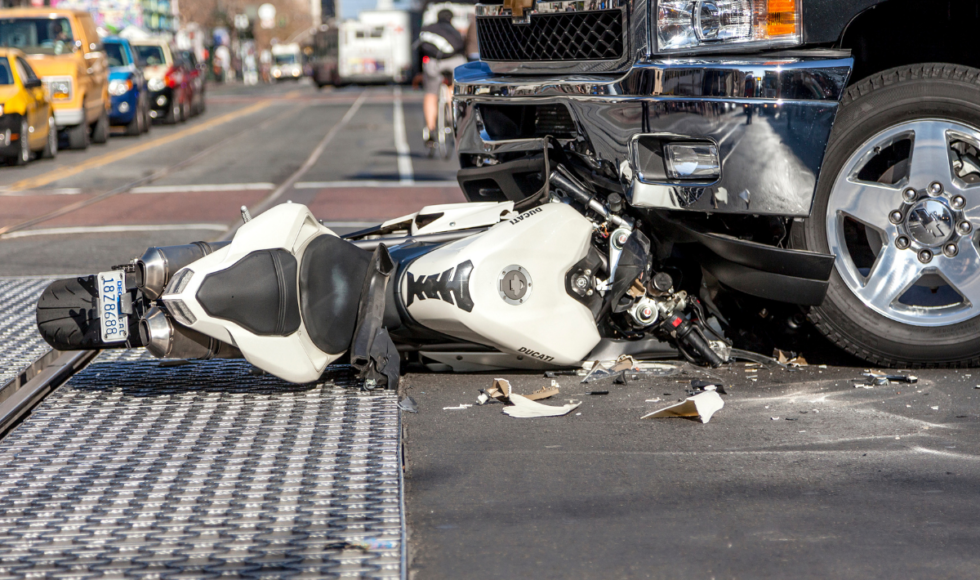
Damage to the motorcycle and the other vehicle may help identify the direction and location of impact and the way the vehicles moved during the crash. Damage patterns can become even more useful when they are evaluated alongside measurements, roadway evidence, video, photographs, and vehicle specifications.
Police Reports
A police report may document driver statements, witness accounts, roadway conditions, diagrams, observations, apparent impact locations, citations, and other details recorded soon after the crash.
Electronic Vehicle Data Can Help Prove Speeding
Many modern vehicles are equipped with event data recorders (EDRs) that may capture information from the moments surrounding a collision. Relevant data may include vehicle speed, braking activity, throttle position, and other operational details.
This electronic information may be compared with video footage, roadway evidence, vehicle damage, and witness statements to help determine whether speeding contributed to the crash.
Because a vehicle may be repaired, sold, salvaged, or altered after a collision, potentially relevant electronic evidence should be identified and preserved as early as possible.
What Is the Basic Speed Law in California?
California Vehicle Code § 22350 prohibits driving faster than is reasonable or prudent given the weather, visibility, traffic, surface, width, and other conditions of the highway. This is referred to as the Basic Speed Law. That means a driver does not have to be traveling above the posted limit to be driving too fast for the circumstances.
Consider a driver who is traveling 35 mph on a road with a 35 mph speed limit when rain is reducing traction and visibility is poor. In this situation, the important question is whether the driver’s speed was reasonable and whether traveling too fast contributed to the collision.
What Should You Do After a Motorcycle Collision
Taking the right steps after a motorcycle crash may help preserve evidence, especially when you need to prove speeding after motorcycle crash allegations are disputed by the other driver.
Consider doing the following when possible:
- Photograph the roadway, vehicles, debris, traffic signs, lane markings, tire marks, and surrounding area.
- Save original dashcam or helmet-camera video files and have them reviewed by an attorney.
- Write down what you remember about the other vehicle’s movements before the collision.
- Collect the names and contact information of any witnesses.
- Keep copies of police information, repair estimates, photographs, medical records, and insurance correspondence.
- Avoid repairing, disposing of, or altering important physical evidence before it can be evaluated when possible.
- Contact a motorcycle injury right away
Talk to an Experienced Chula Vista Motorcycle Accident Lawyer
Eugene Bruno & Associates represents injured people throughout the San Diego region, including Chula Vista. We offer a hands-on approach to helping clients understand your case.
Eugene Bruno & Associates has more than 85 years of combined legal experience and a 99.7% success rate. The firm has recovered more than $100 million, we have more than 5,000 satisfied clients.
If you were injured in a motorcycle accident, call 1-888-BRUNO-88 (1-888-278-6688) to schedule a free consultation today.
Frequently Asked Questions About Motorcycle Accidents and Speeding
How can I prove the driver who hit my motorcycle was speeding?
You may be able to prove speeding after a motorcycle crash using dashcam footage, surveillance video, eyewitness statements, photographs, roadway evidence, police records, vehicle damage, and electronic vehicle data. Accident-reconstruction experts can analyze multiple forms of evidence to estimate how fast a vehicle was traveling.
Does the driver have to exceed the posted speed limit to be considered negligent?
Not necessarily. California’s Basic Speed Law requires drivers to travel at a speed that is reasonable and prudent for weather, visibility, traffic, and roadway conditions. That means a driver could be traveling at an unsafe speed even if they were not exceeding the posted limit.
Can surveillance footage help prove speeding after a motorcycle accident?
Yes. Video from businesses, homes, dashcams, parking lots, or other nearby sources may show how quickly a vehicle approached the collision or moved between identifiable locations. Because some systems automatically overwrite older recordings, this evidence should be identified and preserved as soon as possible.
Can electronic vehicle data help determine how fast a driver was going?
Potentially. Depending on the vehicle and circumstances, electronic systems may contain information concerning speed, braking, throttle input, or other activity near the time of the collision.
 “I would highly recommend Eugene Bruno & Associates! They helped me out with a case of mine and everything worked out perfectly. I worked with Amir, one of the lawyers and he was amazing. Definitely would work with him again. Thank you!”
- Mona Hakim, Google Review- “This people deserve more than 5 stars. I would highly recommend them to anyone.”
- Faisal A., Google Review - “You will not be disappointed hiring these guys. Eugene Bruno & Associates are the best car accident lawyers in San Diego and I recommend them 100%!!”
- Adam C., Google Review - “Take the time to speak with Mr. Bruno, he will definitely help you and guide you and make you feel like family! Best decision I have made, I went with the best. Thank you! Thank you! Thank you!!!!!”
- Lakeisha E., Google Review
 “I would highly recommend Eugene Bruno & Associates! They helped me out with a case of mine and everything worked out perfectly. I worked with Amir, one of the lawyers and he was amazing. Definitely would work with him again. Thank you!”